After an Earthquake, Preserving a Slow Craft in a Fast World
 staff
staff
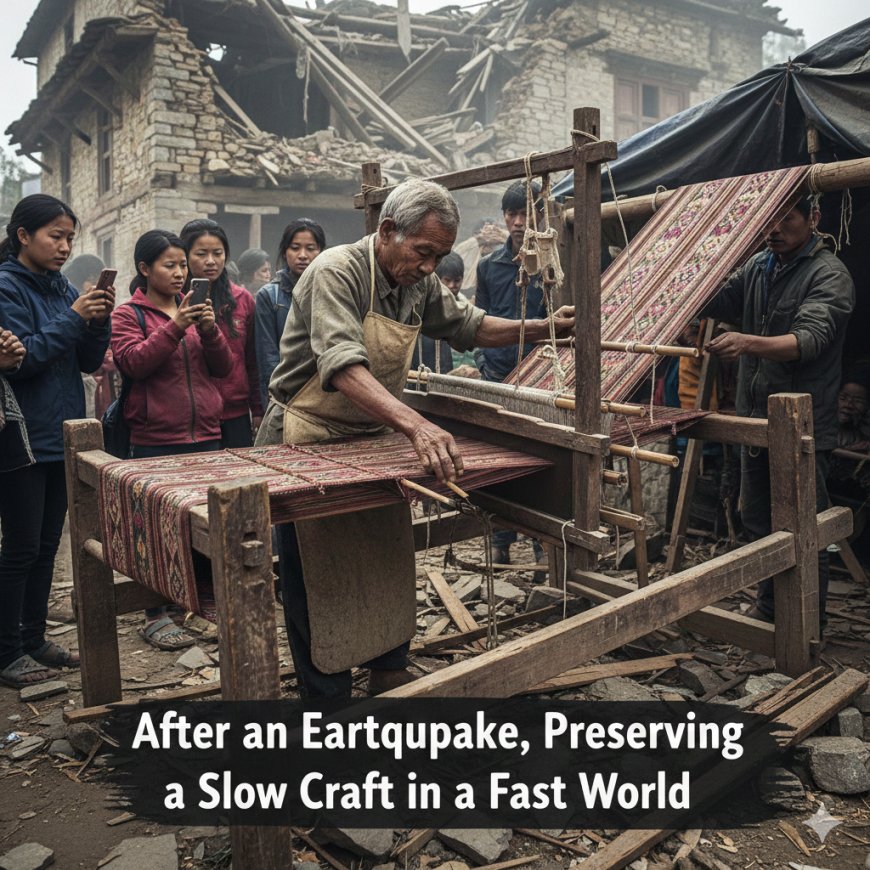
WAJIMA, JAPAN – In the quiet, coastal city of Wajima, time has always been measured differently. While the rest of the world races toward the next technological breakthrough, the artisans here have spent centuries perfecting Wajima-nuri—a form of lacquerware so durable and meticulous that a single soup bowl can take over six months and a hundred individual steps to complete.
But on January 1st, 2024, time stopped in a much more violent way. A 7.6-magnitude earthquake tore through the Noto Peninsula, turning ancient wooden workshops into splintered ruins and igniting fires that swallowed entire districts.
The Weight of Tradition vs. The Speed of Recovery
For the surviving masters, the tragedy isn't just the loss of homes, but the potential extinction of a "Slow Craft." In a modern economy that demands immediate results, Wajima-nuri is an anomaly. It requires:
-
The Harvest: Sap collected by hand from urushi trees, a process that cannot be rushed.
-
The Foundation: Layers of cypress wood reinforced with local volcanic powder.
-
The Patience: Each layer must dry in a climate-controlled environment for weeks before the next can be applied.
Now, these artisans face a cruel paradox. The "Fast World" demands a quick recovery—bulldozing debris to build modern, efficient housing. Yet, the craft they protect thrives on the old ways. Many fear that if the traditional workshops are replaced by generic concrete structures, the soul of the art will vanish.
A Living Treasure in the Rubble
Among the debris, artisans like Kazuo Yamagishi, a Living National Treasure, have been seen sifting through the dust to recover specialized tools—brushes made of human hair and delicate bamboo spatulas—that are no longer manufactured.
"If we lose the tools and the rhythm of the work," one apprentice noted, "we lose the connection to our ancestors. You cannot 3D-print an urushi bowl. You have to wait for the sap to breathe."
Why It Matters
The story of Wajima is a microcosm of a global struggle. As climate change and natural disasters threaten historic sites, the world must decide what is worth saving. Is there room in our high-speed, digital era for a craft that insists on taking its time?
For the people of Wajima, the answer is found in the lacquer itself. Urushi is known to get stronger with age, becoming more beautiful the more it is used. They believe their community is the same: cracked by the earth, but capable of being mended, layer by painstaking layer.