US 500% Oil Tariffs: A New Trade War With BRICS
US imposes a massive 500% tariff on Russian oil and exits the India-led International Solar Alliance. Discover the global economic impact of this 2026 shift.
 staff
staff
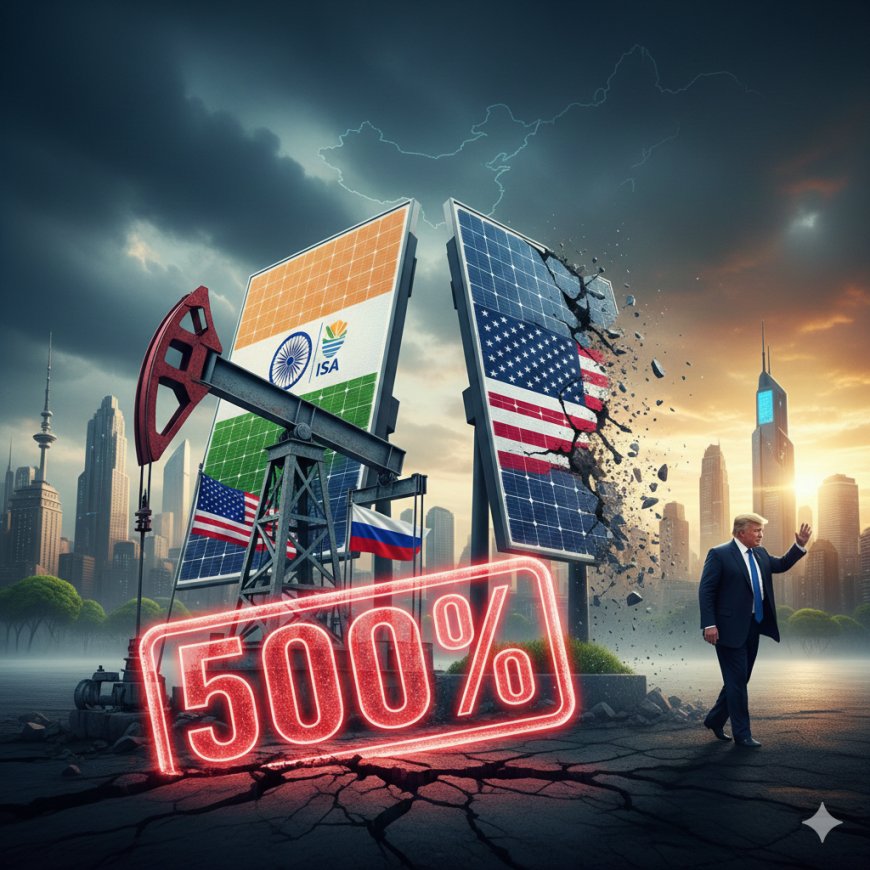
The Donald Trump administration has executed a radical shift in foreign and energy policy this January 8, 2026. In a dual move that redefines relations with the BRICS powers, the United States has greenlit a 500% tariff targeting buyers of Russian crude and officially formalized its withdrawal from the International Solar Alliance (ISA), the organization led by India.
These decisions are not only aimed at suffocating Moscow’s war machine but also mark a historic distancing from multilateral climate commitments and strategic cooperation with New Delhi.
1. The 500% "Super-Tariff": An Indirect Blow to Moscow
The U.S. Congress, with explicit White House backing, has moved forward with the "Sanctioning of Russia Act 2025". This legislation introduces what experts are calling "punitive secondary tariffs."
How do these tariffs work?
Unlike traditional sanctions that freeze assets, this measure imposes a 500% tax on export products from any country that continues to purchase Russian oil above certain thresholds.
-
Primary Targets: China, India, and Brazil.
-
Objective: To force these nations to choose between Putin’s cheap oil or access to the lucrative U.S. market.
"This bill gives the President tremendous leverage to incentivize other countries to stop funding Putin's bloodshed in Ukraine," stated Senator Lindsey Graham.
2. Farewell to the International Solar Alliance (ISA)
In a memorandum ordering the U.S. withdrawal from 66 international organizations, the India-based International Solar Alliance has been one of the most significant casualties.
The Impact on India and the Climate
The ISA, launched jointly by India and France, was a cornerstone of New Delhi’s climate diplomacy. Washington’s withdrawal signifies:
-
Loss of Funding: The U.S. was a key contributor to solar projects in developing nations.
-
Diplomatic Setback: This is being interpreted as a direct snub to Narendra Modi’s government, which has attempted to balance its relationship between Washington and Moscow.
Alongside the ISA, the U.S. has also confirmed its exit from the IPCC (Intergovernmental Panel on Climate Change) and the UNFCCC (United Nations Framework Convention on Climate Change), reaffirming its "America First" policy.
3. Consequences for the Global Economy
The combination of these measures has sparked jitters in international markets. Analysts warn of three critical fronts:
| Sector | Predicted Impact |
| Oil | Possible spike in global prices if India and China drastically cut purchases. |
| Trade | Risk of a full-scale trade war with the BRICS bloc. |
| Clean Energy | Slowdown in the adoption of solar infrastructure in the Global South. |
4. Where is the U.S.-India Relationship Heading?
Despite the rhetoric of friendship between Trump and Modi, the data tells a different story. India already faces recently imposed 50% tariffs due to its trade with Russia. The threat of escalating these to 500% places New Delhi at an unprecedented geopolitical crossroads.
Will India be able to maintain its strategic autonomy, or will it buckle under Washington's economic pressure? The evolution of this crisis will be a defining factor for the world order in 2026.